


Titanium Wire
Why Choose Us
Our Company
Xi'an Zhanwo Metal Materials Co., Ltd. is located in the University Town High-tech Industrial Park, Chang'an District, Xi'an City, Shaanxi Province, China. We have been focusing on nickel-titanium memory alloy and titanium products for more than 13 years.
Excellent Team
The company now has a professional nickel-titanium memory alloy wire R&D team and a nickel-titanium alloy cutting-edge technology public relations team. It has created a rare and precious metal team integrating R&D, design and production. It is an expert in the field of high-performance alloys and high-precision processing.
Rich Experience
We focus on the production of nitinol memory alloy and titanium products have more than 13 years of production experience
Global Sales
Our products are exported to excellent companies in related fields all over the world and have been recognized and praised internationally. We have close cooperation with the United States, Italy, Germany, Vietnam, Indonesia, South Korea, etc.


What Is Titanium Wire?
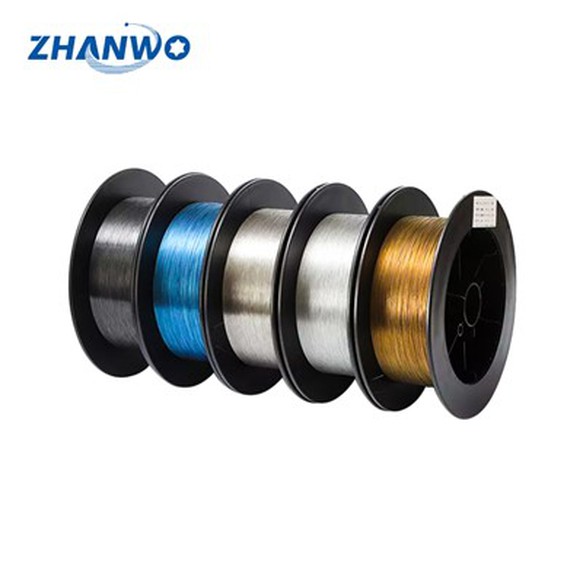
Titanium wire is a small diameter titanium wire produced by annealing and cold drawing of thick wire rod titanium wire. Titanium wire is mainly used to weave titanium mesh, to make titanium filters, anodize anodes, or to make chemical cooling towers by welding titanium frames. , Acid mist tower titanium demister, titanium foam breaking mesh pad. Titanium wire has a light specific gravity and good resistance to acid and alkali corrosion. The surface contains a dense graphite coating, which protects the titanium substrate from being corroded in hydrochloric acid and nitric acid, further improving the corrosion resistance of titanium wire. Black titanium wire is used to weave titanium mesh to manufacture chemical liquid screening and filtration, seawater desalination engineering filtration, titanium anodes
in the electroplating industry, gas-liquid separation in acid mist towers, and material screening in the fertilizer industry.
Types of Titanium Wire
Commercially pure (CP) titanium wire:
This type of wire is most commonly used in applications where flexibility and corrosion resistance are important. Grades like Gr1 and Gr2 are typical examples that offer excellent formability and are frequently employed in chemical processing and medical devices.
Titanium alloy wire:
Wires like Gr5 or Ti-6Al-4V combine titanium with other elements such as aluminum and vanadium to enhance their strength. These are suitable for high-performance applications such as aerospace engineering where durability under extreme conditions is essential.
Shape memory titanium wire:
Some wires made from nickel-titanium alloys - often referred to as Nitinol - exhibit shape memory characteristics. They can return to a predetermined shape when heated, which is useful in applications like actuators or couplings.
Medical grade titanium wire:
Specifically designed for biocompatibility, wires in grades like Gr23 are used for surgical implants because they can be safely placed within the human body without causing an immune response.
High strength titanium wire:
For industrial applications requiring exceptional tensile strength without adding weight, such as in automotive or marine industries, high-strength wires made from grades like Gr12 are chosen.
Advantages of Titanium Wire

1/ Durability and strength
Titanium wire is known for its exceptional strength, making it ideal for use in the industry. Compared to other materials like stainless steel, it is stronger and more durable; it also has a high resistance to corrosion, fatigue, and heat, and it can maintain this strength even under extreme temperatures.
2/ Temperature stability
When it comes to aircraft components, stability under various temperatures is essential. Titanium wire has a low coefficient of thermal expansion to maintain its shape and size even as temperature changes. This makes titanium wire particularly useful in high-temperature applications or aircraft components subject to sudden and extreme temperature fluctuations.


3/ Light weight
Another advantage of using titanium wire in the industry is its lightweight nature. Compared to other metals typically used in the industry, it offers a much lower density, which makes it a perfect choice for components that need to be lightweight.
4/ High machinability
The high machinability of titanium wire is another benefit that makes it popular in the industry. Being a soft metal, it is easy to shape, forming complex geometries that would otherwise be difficult to achieve with other materials.

Application of Titanium Wire
Titanium wire also perfectly inherits the advantages of titanium and titanium alloys, with a series of excellent characteristics such as good corrosion resistance, high specific strength, non-magnetic, high biocompatibility, low impedance to ultrasound, and good shape memory function.
Therefore, titanium and titanium alloy wires are widely used in many fields such as the military industry, glasses, earrings, headwear, electroplating hangers, welding wires, aerospace, petrochemical, medical and health, automotive, construction, and sports and leisure products.
And in recent years, due to the continuous development of the titanium wire industry, the variety of titanium wire has become increasingly diverse, which makes titanium wire more and more widely used in high-performance industrial supplies and consumer products.

2024
1.
At present, more than 80% of titanium and titanium alloy wires are used as welding wires, such as welding of various titanium equipment, welding pipes, repair welding of turbine discs and blades of aircraft jet engines, and welding of casings.

2023
2.
Due to its excellent corrosion resistance, titanium wire has been widely used in chemical, pharmaceutical, papermaking, and other industries. It can be made into a mesh for seawater filter, purified water filter, chemical drug filter, etc.

2022
3.
Titanium and titanium alloy wires are also used to manufacture fasteners, load-bearing members, springs, etc. due to their good overall performance.

2021
4.
In the medical and health industry, due to their excellent biocompatibility, titanium and titanium alloy wires are used to manufacture medical devices, skull fixation, etc.
2020
5.
Some titanium alloy wires with shape memory function, such as titanium-nickel alloy wires, are used to make satellite antennas, shoulder pads for clothes, women’s bras, and eyeglass frames.
2019
6.
In the electroplating and water treatment industries, titanium and titanium alloy wires are used to manufacture various electrodes.
In short, with the development of the economy, the demand for titanium and titanium alloy wires is increasing. At present, titanium and titanium alloy wires are in short supply, and their development potential is very large.
Titanium wire is highly sought after in diverse industries because of its exceptional properties and characteristics.These wires are recognized for their remarkable strength-to-weight ratio, outstanding corrosion resistance, and biocompatibility.
Ductility
Titanium wire exhibits remarkable ductility, allowing it to be effortlessly drawn into delicate strands without any risk of fracture. This impressive characteristic is attributed to the low density and exceptional strength-to-weight ratio possessed by titanium.
Corrosion resistance
Titanium wires are renowned for their exceptional corrosion resistance, ensuring that they remain unaffected by the elements. When exposed to oxygen, titanium forms a protective oxide layer on its surface, preventing any rust or corrosion from occurring.
High melting point
Due to its strong atomic bond, titanium possesses a high melting point, enabling it to endure extreme temperatures without undergoing any form of melting.
Non-magnetic
Titanium possesses the characteristic of being non-magnetic, which makes it impervious to the pull of magnets. This unique attribute stems from titanium’s atomic structure, as it lacks any unpaired electrons.
Biocompatible
Titanium is biocompatible, meaning that it does not cause an immune reaction when implanted into the body. This property is because the body’s immune system does not reject titanium.
1) The site or warehouse for storing titanium wire products should be clean and tidy with smooth drainage, away from factories and mines with harmful gases or dust. Weeds and all debris on the ground should be removed to keep the titanium clean.
2) Acids, alkalis, salts, asbestos soil and other items that corrode titanium should not be piled up in the warehouse. Different types of titanium materials should be stacked separately to avoid mixing and contact with corrosive objects.
3) Titanium alloy materials such as large titanium tubes, titanium rods, thick titanium wires, large-diameter titanium tubes, titanium forgings, etc. can be piled up in the open air.
4) Small and medium-sized titanium materials, titanium wires, titanium rods, medium-caliber titanium tubes, titanium wires, etc. can be stored and placed in a well-ventilated shed.
5)Small titanium materials, titanium wires, titanium strips, small-caliber or special-shaped titanium tubes, various cold-rolled and cold-drawn titanium materials, expensive and easily corroded metal products can be stored and placed in a shed.
6) The warehouse needs to maintain a suitable storage background, pay attention to ventilation on sunny days, and be closed and moisture-proof on rainy days.
The warehouse should be selected according to geographical conditions. When it is considered appropriate, an ordinary closed warehouse should be used, that is, a warehouse with a roof and walls, tightly closed doors, and equipped with ventilation devices.
The process flow of the product
Process of Titanium Wire
The drawing process in the production of titanium wire is an important metalworking method used to transform titanium blanks into thin filamentary materials. This process is widely used in titanium alloy manufacturing, aerospace, medical equipment, chemical industry and other fields.
Titanium blank preparation
The drawing process first needs to prepare titanium blanks. Titanium blanks are usually supplied in bulk or rod form, which contain high impurities and require heating and other pretreatment processes to purify and improve their properties.
Heating and pretreatment
The titanium blank is preheated and pretreated to eliminate internal stress and lattice defects and make it easier to process.
Heating furnace
A special heating furnace is used in the drawing process to heat the titanium blank to a high enough temperature so that it can form a plastic flow in the drawing machine.
Drawing machine
The drawing process uses a drawing machine to gradually stretch the heated titanium blank into a slender titanium wire. Drawing machinery usually consists of multiple sets of rollers or dies that reduce the diameter of the titanium wire through continuous stretching and compression.
Cooling
During the drawing process, titanium wire is easily deformed by heat, so it needs to be cooled after drawing to ensure that it maintains the desired shape and size.
Continuous multiple drawing
Usually, in order to achieve the desired diameter and performance of the titanium wire, the titanium wire will undergo multiple continuous drawing processes. Each pull reduces the diameter of the titanium wire while increasing its tensile strength and hardness.
Surface treatment
There may be some surface defects in the drawn titanium wire, so surface treatment, such as pickling, polishing or electroplating, is required to improve its surface quality.
Titanium wire detection
During the drawing process, titanium wire may have some defects, such as cracks, bubbles, etc. Therefore, the titanium wire needs to undergo strict testing and quality control after drawing to ensure that it meets specifications and standards.
Cutting and coiling
The drawn titanium wire is cut and coiled for easy transportation and use.
The drawing process in the production of titanium wire is a process in which titanium blanks are gradually converted into elongated titanium wires of required diameter and performance through continuous stretching and compression operations. This process plays a vital role in the production of titanium alloy materials, ensuring the quality and performance of the final product.
How to Choose a Titanium Wire
Grade selection
Understanding the differences between pure titanium grades (like Gr1 or Gr2) and alloy grades (such as Gr5) is vital. Pure grades offer better formability and corrosion resistance but lower strength than alloy grades. Alloy grades incorporate elements that increase strength but can reduce formability.
Mechanical properties
The tensile strength, fatigue limit, and ductility of the wire should align with the demands of the application. For instance, high-strength wires might be necessary for structural components in aerospace applications while more ductile wires could be preferred for medical implants.
Corrosion resistance
If the wire will be exposed to corrosive environments or substances, selecting a grade with excellent corrosion resistance becomes crucial. Certain applications may also require additional surface treatments like pickling or anodizing for enhanced protection.
Form factor
Wires come in different shapes such as round, coil, or spool. Choose a shape that facilitates easy handling and integration into your manufacturing process.
Certifications and standards
Ensure that the wire complies with relevant industry standards (e.g., ASTM F2063 for biomedical applications) to guarantee compatibility with regulatory requirements.
Our Factory
Xi'an Zhanwo Metal Materials Co., Ltd. is located in High-tech Industrial Park, University City, Chang'an District, Xi'an City, Shaanxi Province, China. Our company mainly produces and sells rare and precious metal products, including nitinol, tantalum-niobium, tungsten-Nickel, zirconium-hafnium, and titanium products. Nitinol and tantalum-niobium products are the main products of our company. We have been focusing on the nitinol alloy industry and tantalum-niobium products for more than 13 years. Our company's product types include: wire, plate, pipe, rod, target, foil, screw, spring, nitinol jewelry and jewelry accessories, titanium products and titanium crafts, and various customized parts, etc. Relying on the resource advantages of China Titanium Valley and Baotai Group, our company has cooperated with the technical personnel of Northwest Nonferrous Metals Research Institute to train and gather a group of high-level, refined, and professionally skilled personnel for the company.

Certificate
Passed CE certification, IS09001 quality system certification, and obtained a number of patent certificates.

FAQ
We're professional titanium wire manufacturers and suppliers in China, specialized in providing high quality customized service. We warmly welcome you to wholesale titanium wire for sale here and get free sample from our factory. For price consultation, contact us.
Titanium Alloy Wire