


Titanium Foil
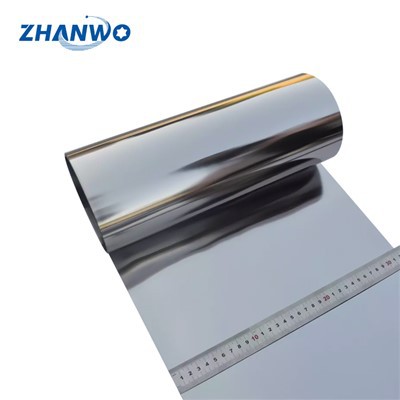
Titanium Foil is a thin sheet of pure titanium, renowned for its exceptional combination of strength, lightweight, and corrosion resistance. This unique material boasts high-temperature tolerance and excellent electrical conductivity, making it highly versatile in various industries. Notably, the aerospace industry benefits from Titanium Foil's superior performance and durability in aircraft components. The automotive industry also employs it in exhaust systems and other critical parts to enhance corrosion resistance and reduce weight. Furthermore, the medical industry finds it ideal for implants and surgical instruments due to its biocompatibility and corrosion resistance. Titanium Foil offers a robust, lightweight, and corrosion-resistant solution for a range of industrial applications, making it a highly valued material in various industries.
Exceptional strength-to-weight ratio
Titanium Foils and plates are renowned for their remarkable strength-to-weight ratio, making them ideal for applications where strength and lightness are paramount. Despite being significantly lighter than steel, titanium exhibits exceptional strength, ensuring structural integrity in various engineering and industrial applications.
Outstanding corrosion resistance
One of the most notable features of Titanium Foils and plates is their exceptional corrosion resistance. Titanium is highly corrosion-resistant in many environments, including seawater, acidic solutions, and chlorine. This corrosion resistance makes titanium an excellent choice for marine, chemical processing, and offshore applications where exposure to corrosive elements is inevitable.
Superior biocompatibility
Titanium is inherently biocompatible, is well-tolerated by the human body, and exhibits minimal reactivity with bodily tissues and fluids. This feature makes Titanium Foils and plates highly suitable for medical implants, such as orthopaedic implants and dental prosthetics, where biocompatibility is critical for long-term implant success.
Excellent heat resistance
Titanium possesses excellent heat resistance, retaining its mechanical properties even at elevated temperatures. This feature makes Titanium Foils and plates suitable for high-temperature applications, such as aerospace components, gas turbine engines, and exhaust systems, where materials are subjected to extreme heat and thermal cycling.
Formability and machinability
Despite its formidable strength, Titanium Foils and plates offer good formability and machinability, allowing easy fabrication and customization to meet specific project requirements. Whether bending, welding, or machining, titanium exhibits favourable mechanical properties that facilitate efficient processing and manufacturing.


Why Choose Us
Our Factory
Xi'an Zhanwo Metal Materials Co., Ltd. is located in the University Town High-tech Industrial Park, Chang'an District, Xi'an City, Shaanxi Province, China. We have been focusing on nickel-titanium memory alloy and tantalum-niobium products for more than 13 years.
Excellent Team
The company now has a professional nickel-titanium memory alloy wire R&D team and a nickel-titanium alloy cutting-edge technology public relations team. It has created a rare and precious metal team integrating R&D, design and production. It is an expert in the field of high-performance alloys and high-precision processing.
Rich Experience
We focus on the production of nickel-titanium memory alloy and have more than 13 years of production experience
Global Sales
Our products are exported to excellent companies in related fields all over the world and have been recognized and praised internationally. We have close cooperation with the United States, Italy, Germany, Vietnam, Indonesia, South Korea, etc.
Aerospace industry
Titanium foil is commonly used in the aerospace industry for the manufacturing of aircraft components, such as engine parts, fuselage structures, and wing skins. Its high strength-to-weight ratio and corrosion resistance make it an ideal material for improving fuel efficiency, reducing maintenance costs, and enhancing the overall performance and durability of aircraft.
Automotive industry
In the automotive industry, titanium foil is used in exhaust systems, catalytic converters, and other high-temperature components due to its excellent corrosion resistance and high-temperature tolerance. It helps to improve the efficiency and durability of vehicles while reducing emissions and environmental impact.
Medical Industry
Titanium foil is also widely used in the medical industry, particularly in the manufacturing of implants and surgical instruments. Its biocompatibility, corrosion resistance, and non-toxic properties make it a safe and reliable material for use in the human body. Titanium implants are commonly used in orthopedic, dental, and cardiovascular applications.
Chemical Industry
Due to its excellent corrosion resistance, titanium foil is also used in the chemical industry for the construction of chemical reactors, heat exchangers, and other equipment exposed to harsh chemicals and environments. It helps to ensure the safe and efficient operation of chemical processes.

To ensure the longevity and performance of titanium foils, proper maintenance and care is essential. An important aspect of maintenance is regular cleaning. Titanium foils accumulate dirt, dust and other contaminants over time, which can affect their appearance and performance. It is recommended that titanium foils be cleaned with a mild soap or detergent and warm water. Avoid using abrasive cleaners or scouring pads as they can scratch the surface of the titanium foil. After cleaning, rinse the titanium foil thoroughly with water and then dry it with a soft cloth to prevent water damage.
Another important aspect of maintenance is to avoid exposure to chemicals that can damage titanium panels. Although titanium is highly resistant to corrosion, certain chemicals, such as strong acids and bases, can still cause damage. It is important to avoid exposing titanium foils to these chemicals as they can cause pitting or corrosion on the surface. If contact with these chemicals is unavoidable, it is recommended that the titanium foil is rinsed immediately with plenty of water to minimise potential damage.
In addition, care must be taken when handling titanium foils to prevent any physical damage. Although titanium is a strong material, it can still scratch or dent if not handled properly. When transporting or storing titanium foils, avoid dropping or hitting them on hard surfaces and use protective covers or pads. Also, avoid using sharp or abrasive tools on titanium foils as they can cause scratches or dents.
Titanium foil is a versatile and durable material with excellent strength-to-weight ratio, corrosion resistance and biocompatibility. It is commonly used in various industries such as aerospace, automotive and medical. To ensure the longevity and performance of titanium foil, proper maintenance and care is essential. This includes regular cleaning, avoiding exposure to chemicals that can damage titanium foil, and careful handling to prevent physical damage. By following these maintenance and care tips, titanium foils will continue to perform excellently and effectively for their intended purpose.
The Main Production Methods of Titanium Foil Are
Rolling
Titanium foil is manufactured by flat-roller belt rolling. It is widely used for its high productivity and large scale and output. Six-roller cold rolling mills or 20-roller cold rolling mills are basically used for production.
Heat treatment
Mainstream heat treatment of titanium strip foil has two ways: vacuum annealing and continuous online protection annealing. Vacuum annealing is placing rolls or sheets of titanium foil in a vacuum furnace for heat treatment; continuous online protection annealing of titanium strip foil is a new technology introduced in recent years, which has higher production efficiency compared with vacuum annealing and higher product quality improvement, but the equipment threshold is high, especially for product quality and good mechanical properties of titanium strip foil index.
Process of Titanium Foil

Raw material preparation: Selection of high quality titanium ore or titanium alloy raw materials.
Melting: The raw materials are melted at high temperatures to obtain a homogenous titanium melt.
Casting: The melt is cast into the shape of a slab.
Hot rolling: Rolling of slabs at high temperatures to reduce thickness and improve internal organization.
Cold rolling: Further rolling to achieve the required thickness and dimensional accuracy. 6. Annealing: Removing internal stresses.
Annealing: To eliminate internal stresses and improve the plasticity and toughness of the plate.
Surface treatment: Uch as pickling, polishing, etc., in order to improve the surface quality.
Quality inspection: Perform various tests, including chemical composition analysis, mechanical property test, dimensional accuracy check, etc.
Cutting and processing: Cut the Titanium Foil into specific size and shape according to customer's requirement.
Packaging: Packaging the finished products to protect the sheets from damage during transportation and storage.
How to Choose a Titanium Foil
Determine the size and thickness
Choosing the size and thickness of your grade 5 Titanium Foil depends on your specific project requirements. Larger plates are typically more expensive and challenging to handle. So, it's crucial to consider your project's dimensions before selecting the plate's size. Thickness selection, on the other hand, depends on the stress on the plate. For instance, a thicker titanium grade 5 plate would be appropriate if the plate is used in high-stress applications. Thickness selection also depends on the machining process. Thinner plates are easier to drill, cut, and form into smaller parts, while thicker plates may require specialized cutting equipment.
Check the specifications
When choosing the best grade 5 Titanium Foil for your project, it's imperative to check its specifications. Typically, astm specifications cover the standard requirements for Titanium Foils. If you are using the plate for aerospace or marine applications, aerospace material specifications (ams) are commonly used. The ams standards have stricter requirements and are more specific, ensuring that the plate you select meets the high standards for these industries.
Evaluate the application
The successful selection of titanium grade 5 plates depends on the intended application. For instance, if your project involves high-temperature applications, it's advisable to select grade 5 titanium alloy with higher thermal stability to withstand the high temperatures. A high-quality plate with tight dimensional tolerances can help achieve the required accuracy if the intended application requires excellent precision.
Determine the quantity required
When selecting grade 5 Titanium Foils, you must determine the required quantity for your project. The cost per plate decreases as the quantity increases. Therefore, consider buying the plates in bulk for the most cost-effective prices. Buying in bulk also ensures you have enough material to complete your project without delays.
Choose a reliable supplier
Lastly, the quality and reliability of the supplier are crucial when selecting grade 5 Titanium Foils. Ensure you choose a trusted and reputable supplier with an excellent track record of delivering high-quality Titanium Foils. A reliable supplier should offer a range of grades, sizes, and thicknesses at competitive prices. They should also be reliable in delivery times, provide excellent customer service, and address any concerns regarding the product.
Which Surfaces of Titanium Foil Form a Protective Oxide Layer?
Passive oxide layer
When exposed to air or oxidizing environments, titanium naturally forms a thin, continuous oxide layer on its surface. This oxide layer, primarily titanium dioxide (tio2), acts as a protective barrier, shielding the underlying metal from further corrosion.
Stability of oxide layer
The oxide layer formed on titanium is stable and adheres strongly to the metal surface. This stability prevents the continuous growth of corrosion and ensures long-term protection.
Self-healing properties
If the oxide layer is damaged or scratched, titanium has the ability to self-heal. The oxide layer reforms rapidly in the presence of oxygen, maintaining the protective barrier and preventing the progression of corrosion.
Resistance to pitting corrosion
Titanium exhibits resistance to pitting corrosion, which is a localized form of corrosion that can occur in the presence of chloride ions. This makes titanium foil suitable for applications in marine environments.
Resistance to chemical corrosion
Titanium is resistant to corrosion by many chemical substances, including acids, alkalis, and salt solutions. This makes it suitable for applications in chemical processing industries where exposure to corrosive chemicals is common.
Our Factory
Xi'an Zhanwo Metal Materials Co., Ltd. is located in High-tech Industrial Park, University City, Chang'an District, Xi'an City, Shaanxi Province, China. Our company mainly produces and sells rare and precious metal products, including nitinol, tantalum-niobium, tungsten-Nickel, zirconium-hafnium, and titanium products. Nitinol and tantalum-niobium products are the main products of our company. We have been focusing on the nitinol alloy industry and tantalum-niobium products for more than 13 years. Our company's product types include: wire, plate, pipe, rod, target, foil, screw, spring, nitinol jewelry and jewelry accessories, titanium products and titanium crafts, and various customized parts, etc. Relying on the resource advantages of China Titanium Valley and Baotai Group, our company has cooperated with the technical personnel of Northwest Nonferrous Metals Research Institute to train and gather a group of high-level, refined, and professionally skilled personnel for the company.

Certificate
Passed CE certification, IS09001 quality system certification, and obtained a number of patent certificates.

FAQ
We're professional titanium foil manufacturers and suppliers in China, specialized in providing high quality customized service. We warmly welcome you to wholesale titanium foil for sale here and get free sample from our factory. For price consultation, contact us.
