


Molybdenum
Xi'an Zhanwo Metal Materials Co., Ltd. is located in High-tech Industrial Park, University City, Chang'an District, Xi'an City, Shaanxi Province, China. Our company mainly produces and sells rare and precious metal products, including nitinol, tantalum-niobium, tungsten-molybdenum, zirconium-hafnium, and titanium products. Nitinol and tantalum-niobium products are the main products of our company.



why choose us
Rich Experience
We have been focusing on the nitinol alloy industry and tantalum-niobium products for more than 13 years. our company has cooperated with the technical personnel of Northwest Nonferrous Metals Research Institute to train and gather a group of high-level, refined, and professionally skilled personnel for the company.
Advanced Equipment
We have high-precision tantalum metal purification equipment, vacuum arc melting furnaces, vacuum induction melting furnaces, compact directional solid-state melting and casting equipment, tantalum tube cold rolling equipment e.t.c
Custom Service
Integrated factory strength to support all kinds of tantalum and tantalum alloy products customization and each product can be customized designed and produced according to the customer's project technical requirements.
Global Shipping
Our products have been sold to excellent companies in related fields all over the world, and have received international recognition and praise. Close partners from the United States, Italy, Germany, Vietnam, Indonesia, South Korea, etc. have visited our company and provided valuable advice to achieve A win-win situation.
Types of Molybdenum
We offer the following Product introduce:
Molybdenum Round Bar
Molybdenum round bar is a strip-shaped material made of molybdenum, which is usually used in industrial applications in extreme environments such as high temperature, high pressure, and high strength, such as in automotive, aerospace, petroleum, and chemical industries.Molybdenum has excellent high-temperature oxidation resistance, corrosion resistance, and high-strength properties, and is rarely contaminated by radioactivity, so it is also widely used in the nuclear industry.
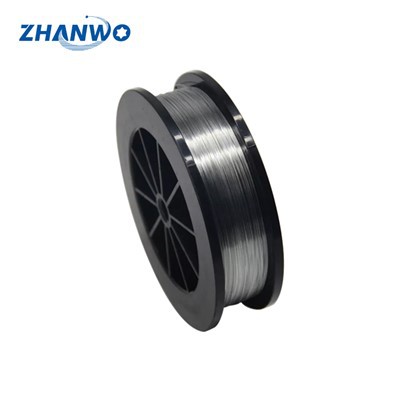
0.18mm Molybdenum Wire
0.18mm molybdenum wire is a metal wire used in industry and science with a diameter of 0.18mm. It is made of molybdenum element, which has the advantages of high melting point, corrosion resistance, and high strength. The metal wire is usually used in high-temperature heating, vacuum equipment, fluorescent profiler, spark film technology, and so on. It can also be used in many applications in the semiconductor, aerospace, and medical field.


Molybdenum Tube
Molybdenum tube is a circular tubular product made of molybdenum material, usually used in high-temperature equipment, vacuum tube, induction cooker, medical equipment, and other fields. Molybdenum has excellent physical and chemical properties such as high-temperature resistance, corrosion resistance, high hardness, and strength, so molybdenum pipe is widely used in various equipment and equipment under high temperature, high pressure, and strong corrosion environment. Molybdenum pipe also has good electrical and thermal conductivity, so it is also used in some electronic devices and heating equipment.
Molybdenum Sheet
Molybdenum sheet is a thin sheet made of molybdenum, which can be made into sheets of different shapes and sizes by cutting, cutting or stamping. Molybdenum is a metallic element with the chemical symbol Mo and atomic number 42. It is a metal with a high melting point, high strength, and high corrosion resistance, and is often used in the manufacture of industrial equipment with high temperature, high pressure, and high strength.
Specification of Molybdenum
|
Atomic number |
42 |
|
CAS number |
7439-98-7 |
|
Atomic mass |
95.94 [g/mol] |
|
Melting point |
2620 °C |
|
Boiling point |
4639 °C |
|
Density at 20 °C |
10.22 [g/cm³] |
|
Crystal structure |
Body-centered cubic |
|
Coefficient of linear thermal expansion at 20 °C |
5.2 ×10⁻⁶ [m/(mK)] |
|
Thermal conductivity at 20 °C |
142 [W/(mK)] |
|
Specific heat at 20 °C |
0.25 [J/(gK)] |
|
Electrical conductivity at 20 °C |
17.9 × 10⁶ [S/m] |
|
Specific electrical resistance at 20 °C |
0.056 [(Ωmm2)/m] |
Advantages of Molybdenum
High Melting Point and Thermal Stability
With a melting point of 2,623°C (4,753°F), molybdenum has one of the highest melting points among all metal elements, making it ideal for high-temperature applications.
Corrosion Resistance
Molybdenum enhances the corrosion resistance of steel, particularly in acidic and alkaline environments, extending the lifespan of equipment and reducing maintenance costs.
Strength and Hardness
Molybdenum significantly increases the strength and hardness of alloys, making them more durable and suitable for demanding applications.
Weldability and Machinability
Molybdenum-containing steels are easier to weld and machine, enhancing production efficiency and reducing costs.
Application of Molybdenum
Steel
In the steel field, molybdenum is mainly used for the production of alloy steel, stainless steel, tool steel, high-speed steel, cast iron, and roll. The use of molybdenum as an additive can enhance the strength and toughness, corrosion resistance, and wear resistance of steel, improve the hardenability, weldability, and heat-resistance of steel. The formation of molybdenum alloy by adding other elements to molybdenum, such as molybdenum lanthanum alloy and TZM alloy, has a better performance than pure molybdenum.
Chemical
In the chemical field, molybdenum can be used as lubricants, catalysts, pigments, flame retardants and smoke suppressants, and corrosion inhibitors of organic polymer. The main products include molybdenum dioxide, molybdenum yellow, molybdate, ammonium paramolybdate.
Electronic Electrical
Molybdenum has good electrical conductivity and high-temperature resistance. Its thermal expansion coefficient is similar to that of glass. It's widely used in the production of the core wire, lead wire, hook, and other components of spiral filament. Molybdenum wire is also the ideal electrode wire for a cutting tool machine, which can cut a variety of steel and carbide. Its processing is stable, which can effectively improve the precision of the mold.
Medical, animal husbandry, and agricultural
Molybdenum is one of the essential trace elements in the human body. The proper amount of molybdenum can promote the development of the human body, enhance the storage of oxygen in the body and inhibit tumors. Ammonium molybdate is used as an active ingredient of medicines. In animal bodies, molybdenum is a molybdenum enzyme composition. Adding the molybdenum additives to the feed can achieve the goal of meeting the needs of animals. Molybdenum is also one of the essential trace elements for plant growth. Seeding using ammonium molybdenum can greatly increase the yield of flowers.
Technical molybdic oxide
About 97 percent of MoS2 must be converted into technical molybdic oxide (85–90 percent MoO3) in order to reach its commercial destination. Such conversion is almost universally carried out in Nichols-Herreshoff-type multiple-hearth furnaces, into which molybdenite concentrate is fed from the top against a current of heated air and gases blown from the bottom. Each hearth has four air-cooled arms rotated by an air-cooled shaft; the arms are equipped with rabble blades that rake material to the outside or centre of the roaster, where the material drops to the next hearth. In the first hearth, the concentrate is preheated and the flotation reagents ignite, initiating the transformation of MoS2 into MoO3. This exothermic reaction, which continues and intensifies in the following hearths, is controlled by adjustment of the oxygen and by water sprays that cool the furnace when necessary. The temperature should not rise above 650 °C (1,200 °F), the point at which MoO3 sublimates, or vaporizes directly from the solid state. The process is finished when the sulfur content of the calcines falls below 0.1 percent.


Chemically pure molybdic oxide
Technical molybdic oxide is made into briquettes that are fed directly into furnaces to make alloy steels and other foundry products. They also are used to make ferromolybdenum, but if more purified molybdenum products are desired, such as molybdenum chemicals or metallic molybdenum, then technical MoO3 must be refined to chemically pure MoO3 by sublimation. This is carried out in electric retorts at temperatures between 1,200 and 1,250 °C (2,200 and 2,300 °F). The furnaces consist of quartz tubes wound with molybdenum-wire heating elements, which are protected from oxidation by a mixture of refractory-brick paste and wood charcoal. The tubes are inclined 20° from the horizontal and rotated. The sublimed vapours are swept from the tubes by air and collected by hoods leading to filter bags. Two separate fractions are collected. The first corresponds to vaporization of the initial 2–3 percent of the charge and contains most of the volatile impurities. The last fraction is the pure MoO3. This must be 99.95 percent pure in order to be suitable for the manufacture of ammonium molybdate (ADM) and sodium molybdate, which are starting materials for all sorts of molybdenum chemicals. These compounds are obtained by reacting chemically pure MoO3 with aqueous ammonia or sodium hydroxide. Ammonium molybdate, in the form of white crystals, assays 81 to 83 percent MoO3, or 54 to 55 percent molybdenum. It is soluble in water and is used for the preparation of molybdenum chemicals and catalysts as well as metallic molybdenum powder.
Packaging & Delivery

Certifications

FAQ
We're professional molybdenum manufacturers and suppliers in China, specialized in providing high quality customized service. We warmly welcome you to wholesale molybdenum for sale here and get free sample from our factory. For price consultation, contact us.
