


1.Introduction to Nitinol Tubes
Nitinol tubes, composed of a nickel-titanium amalgam, show exceptional properties that make them priceless in different businesses.Understanding their composit
ion, physical and chemical properties, manufacturing processes, applications, advantages, limitations, and future trends is essential for maximizing their potential across different sectors.
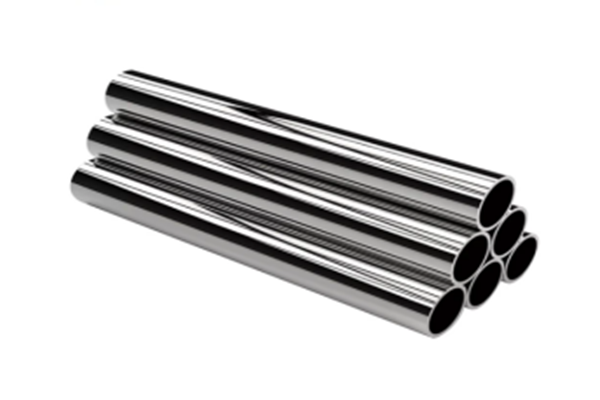
2.Definition and Composition
The tubes are tubular structures made from Nitinol, an alloy primarily composed of nickel and titanium. This unique alloy exhibits exceptional properties such as shape memory effect and superelasticity, which stem from its specific crystal structure and phase transformations.
3.Brief History of Nitinol
Nitinol was found in the 1950s by analysts at the Maritime Arms Research facility in the Joined together States.
The title Nitinol is determined from its composition: "Ni" for nickel, "Ti" for titanium, and "NOL" for Maritime Arms Research facility.
4.Physical Properties of Tubes
Shape Memory Effect: it have the remarkable ability to return to a predetermined shape when subjected to heat after deformation.
Superelasticity: it can undergo large deformations and recover their original shape upon unloading, making them ideal for applications requiring flexibility and resilience.
Thermal Properties: Nitinol exhibits shape memory effect due to its characteristic phase transitions at specific temperatures.
Mechanical Properties: it possess excellent strength, fatigue resistance, and biocompatibility, making them suitable for demanding applications in various industries.
5.Chemical Composition and Structure Nickel-Titanium Combination
Nitinol is regularly composed of around 55-56% nickel and 44-45% titanium, in spite of the fact that slight varieties in composition can occur.
Crystal Structure: Nitinol shows a special precious stone structure known as a "martensitic stage" at lower temperatures and an "austenitic stage" at higher temperatures.
Phase Changes: Nitinol experiences reversible stage changes between martensite and austenite, which contribute to its shape memory and superelastic properties.
6.Manufacturing Process of Tubes
Melting and Alloying: Nitinol is produced through vacuum induction melting, where precise control of the alloy composition is achieved.
Forming and Processing: Nitinol can be shaped into tubes using various manufacturing techniques such as hot or cold drawing, extrusion, or laser cutting.
Heat Treatment: Heat treatment processes such as annealing and quenching are essential for controlling the microstructure and properties of tubes.
7.Applications of Tubes
Medical Devices (Stents, Guidewires): it are extensively used in minimally invasive medical procedures, including the fabrication of stents and guidewires due to their biocompatibility and excellent mechanical properties.
Robotics and Actuators: it find applications in robotics and actuators for their shape memory and superelastic properties, enabling precise and efficient actuation in various mechanisms.
Aerospace Components: it are utilized in aerospace applications for their lightweight, corrosion resistance, and fatigue resistance properties, contributing to the development of advanced aerospace components.
8.Advantages and Limitations
Advantages of Nitinol Tubes: Nitinol offer unique advantages such as shape memory effect, superelasticity, biocompatibility, and corrosion resistance, making them indispensable in numerous high-performance applications.
Limitations and Challenges: Despite their remarkable properties, tubes face challenges such as high manufacturing costs, processing difficulties, and potential issues related to material fatigue and degradation over time.
9.Future Trends and Research
Emerging Applications: Ongoing research explores new applications of it in fields such as energy storage, smart textiles, and adaptive structures, promising exciting advancements in the near future.
Ongoing Research and Developments: Researchers continue to investigate novel manufacturing techniques, alloy compositions, and surface modifications to further enhance the properties and capabilities of it for diverse applications.
10.Conclusion
In conclusion, Nitinol tubes represent a remarkable engineering material with unique properties and versatile applications across various industries. Understanding their properties, manufacturing processes, applications, advantages, and limitations is crucial for harnessing their full potential and driving innovation in engineering and technology.
11.Importance of Tubes in Various Industries
The importance of tubes in various industries cannot be overstated. From life-saving medical devices to cutting-edge aerospace components and advanced robotics, tubes play a pivotal role in enabling technological advancements and improving quality of life worldwide.
12.References
- Pelton, A. R. (2001). "The Shape Memory Effect in Nitinol Alloys." Material Matters, 38, 1-4.
- Tanaka, K. (1986). "A Thermomechanical Sketch of Shape Memory Effect: One-dimensional Behavior and Experiments." Archives of Mechanics, 38(4-5), 461-480.
- Duerig, T. W., Pelton, A. R., & Stöckel, D. (1999). "An Overview of Nitinol Medical Applications." Materials Science and Engineering: A, 273-275, 149-160.
- Buehler, W. J., & Wang, F. E. (1968). "Some Novel Properties of the NiTi Alloys." Journal of Applied Physics, 39(3), 1497-1501.
- European Space Agency. (2008). "Nitinol Shape Memory Alloys." Retrieved from
- Liu, Y., & Shaw, J. A. (2011). "Recent Progress in Shape Memory Alloy Research." Materials Science and Engineering: R: Reports, 72(3), 71-142.


