


In high-end manufacturing fields such as aerospace, titanium alloy GR5 has become a core material due to its advantages such as good thermal stability, strong corrosion resistance, and high tensile strength. However, its low thermal conductivity and high cutting force make drilling a "hot potato"-prone to problems such as rapid tool wear, drill bit jamming, and out-of-tolerance drilling dimensions, severely slowing down production efficiency. Today, we will break down the core difficulties and solutions in drilling titanium alloy GR5 to help companies overcome processing bottlenecks!
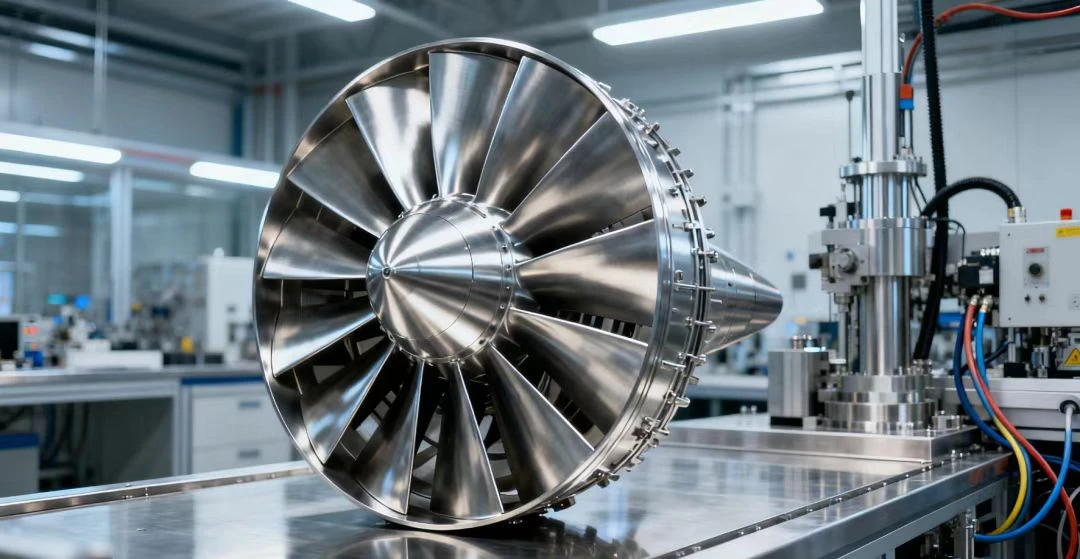
Four Major Obstacles to Drilling Titanium Alloy TC4
1. Extremely High Cutting Temperature: Strong atomic bonding and poor thermal conductivity result in cutting zone temperatures 2-3 times higher than carbon steel, drastically reducing tool life and making parts prone to thermal deformation.
2. Significant Springback: Low elastic modulus and high yield strength ratio lead to surface springback after drilling, easily causing out-of-tolerance dimensions and affecting assembly accuracy.
3. Severe tool wear: High friction coefficient with the drill bit, small cutting deformation, and easy wear and breakage of the tool edge under high temperature and friction.
4. Difficult chip removal: Strong chemical affinity, easily adhering to the tool under high temperature and pressure, chip accumulation forming built-up edge, scratching the part surface.
Five Core Solutions for Titanium Alloys
1. Choosing the right tool material: Preventing chemical reactions. Prioritize cemented carbide with little or no TiC content; materials containing cobalt or YG(K) series are best. These materials avoid high-temperature reactions with titanium alloys, reducing cutting resistance and extending tool life.
2. Optimizing tool angles: Reducing resistance and preventing springback. • Grind the point angle to 135°-140° to enhance drill rigidity and reduce vibration; • Increase the outer clearance angle to 12°-15° to reduce friction with the machined surface; • Reduce the chisel edge length to 0.08-0.1 mm to reduce axial force and suppress springback.
3. Upgraded Tool Structure: Enhanced Breakage Resistance. Utilizing a four-ligament drill design, the cross-sectional moment of inertia is increased, improving drill rigidity. This is particularly suitable for machining shell-type parts, effectively preventing drill breakage due to excessive friction.
4. Matched Drilling Parameters: Precise Parameter Control. Spindle speed and feed rate are adjusted according to the drill diameter. For example, for a Φ3mm hole, a high spindle speed is required to ensure surface roughness, while a low feed rate prevents jamming and chipping. Specific parameters can be determined through experimental optimization.
5. Choosing the Right Cutting Fluid: Dual Cooling and Lubrication Protection. Water-based cutting fluids are prohibited. Prioritize N32 machine oil + kerosene (3:1 or 3:2 ratio) or sulfurized cutting oil. For special applications, electrolytes containing sebacic acid and triethanolamine can be used, providing cooling, lubrication, and chip removal.

Practical Case Study: Optimal Process for Machining 6-Φ3mm Holes
1. Pre-machining Positioning: Mill a small flat surface on the inclined plane using a milling cutter smaller than Φ3mm to prevent drill drift.
2. Center Drilling: Use a Φ2mm center drill to position the hole and ensure drilling accuracy.
3. Tool Parameters: Drill tip angle 135°-140°, helix angle 35°-40°, drill core thickness 0.4-0.22D, and grind the S-shaped/X-shaped chisel edge.
4. Process Control: Control the cutting edge runout to ≤0.03-0.1mm, use dedicated cutting fluid throughout the process, and promptly remove chips.


